
Writing is Therapy
A method of self-discovery, shadow work, and psychological integration. The doorway is creativity, but the deeper destination is consciousness.
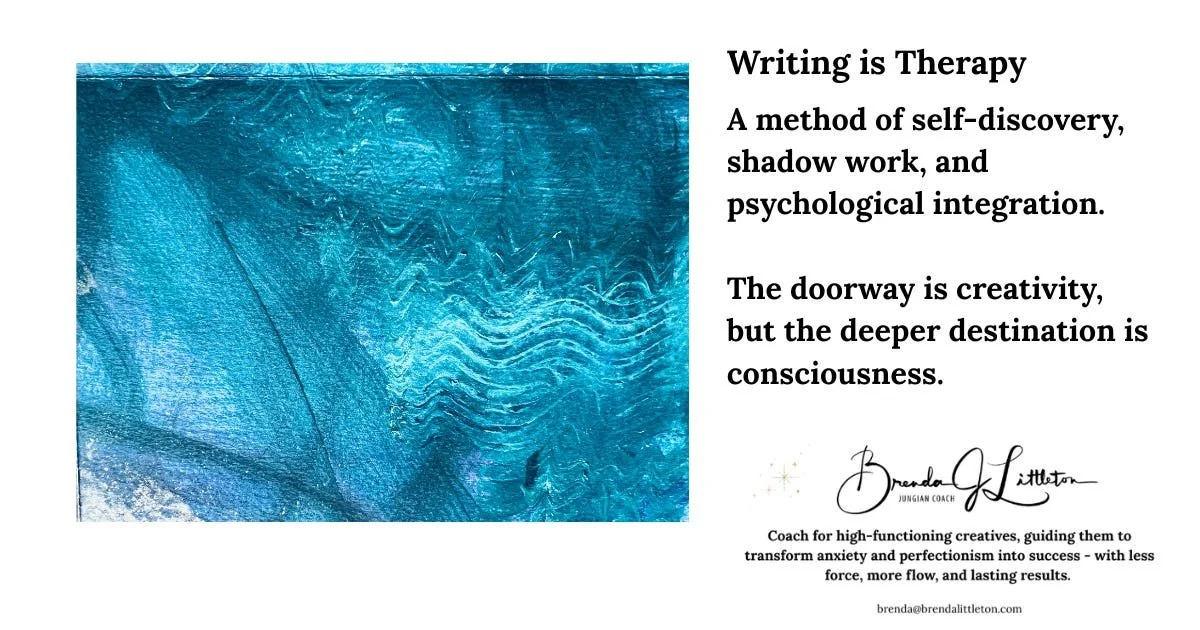
original art work: paste paper by B. Littleton
There is a quiet place beneath every story we tell about why we are not yet creating.
If we pause long enough, we can feel it. Beneath the explanations about timing, discipline, readiness, or needing one more idea, there is a subtle current moving underneath the surface of the mind. It is the pulse of something that once reached toward expression and quietly pulled back when the world did not know what to do with it.
Many creative lives begin this way.
Not with failure.
Not with a lack of talent.
But with a moment when something genuine in us reached forward and did not find the welcome it needed.
A drawing dismissed.
A poem misunderstood.
An idea met with indifference or ridicule.
A room that valued safety more than imagination.
The psyche learns quickly in these moments. Long before we can explain it with words, the body absorbs the lesson.
This part of you is dangerous.
Do not show it again.
What follows often looks like procrastination, hesitation, perfectionism, or the constant feeling that the work is not quite ready. Yet what appears to be resistance is often something far more intelligent. It is the psyche protecting the most alive parts of you until there is enough strength, safety, and inner authority to carry them.
In depth psychology we might call this the shadow, although that word is often misunderstood. The shadow is not simply what is wounded. It also contains what was too vivid, too imaginative, too emotionally intense to survive easily in the environments where we first tried to live as ourselves.
Brilliance can be exiled just as quickly as pain.
So can originality, curiosity, anger, tenderness, and wild imagination.
None of these were hidden because they lacked value. They were hidden because they needed protection.
For many creatives, the block is not a lack of inspiration. It is the nervous system remembering earlier moments when expression felt unsafe. The body tightens before the work can even begin. We call it procrastination, but beneath it there is often a quiet contraction that says, almost protectively, not yet.
Seen this way, resistance is not the enemy.
It is a guardian.
The task is not to fight it, shame it, or overpower it with discipline. The task is to create enough steadiness inside ourselves that the parts which once hid can begin to emerge again.
This is why the doorway back into creative life is rarely found through force of will alone. It begins more quietly through presence, attention, and the gradual rebuilding of safety within the body.
A paragraph written without judgment.
A sketch drawn simply to feel the pencil move across the page.
A sentence that appears before we know where it is going.
These are small acts, but they reopen the conversation between the self and the imagination.
Over time something important becomes visible.
The part of you that seemed to delay your work was not trying to stop your life. It was trying to protect the most luminous parts of it until you were ready to stand beside them.
Creative hesitation is rarely proof that you are not meant to do the work.
More often, it is evidence that something inside you has been waiting for the moment when your voice can finally be welcomed by the person who matters most.
You.
When people recognize their resistance once served a protective purpose, shame loosens and curiosity begins to return. This is often the moment when creativity starts to move again.
Hesitation may actually be the psyche protecting something deeply alive that was once unwelcome. This reframing is extremely powerful because it removes shame.
Once shame softens, curiosity can enter, and curiosity is the emotional state which allows writing to begin.
Here is an exercise from my writing program to start your process of being in conversation with your Creative Self:
Remembering What Once Wanted to Be Expressed:
Before beginning, take a moment to sit quietly and notice your breathing. Allow your body to settle into the chair. Let the room become still around you.
Then write for ten minutes without editing or correcting yourself.
Prompt #1:
Write about something you once loved to do but gradually stopped sharing with the world.
It may have been drawing, singing, telling stories, building things, asking unusual questions, or imagining possibilities others could not see.
Describe the memory as clearly as you can. Where were you? Who else was present? What did the activity feel like in your body when you were doing it?
Do not worry about making the writing beautiful. Simply allow the memory to return.
Material is from my program, Writing is Therapy:
Writing is a method of self-discovery, shadow work, and psychological integration. The doorway is creativity, but the deeper destination is consciousness.
Students learn:
how the psyche protects expression.
how to work with the inner editor.
how to access the unconscious through writing.
how language reorganizes emotional experience.
if interested, email me at brenda@brendalittleton.com
written by Bren Littleton
original art work: paste paper by B. Littleton
Tin Flea Press c. 2026