

Jungian coach, educator, and advocate for the role of creativity and imagination in how we come to know ourselves and participate in the world.
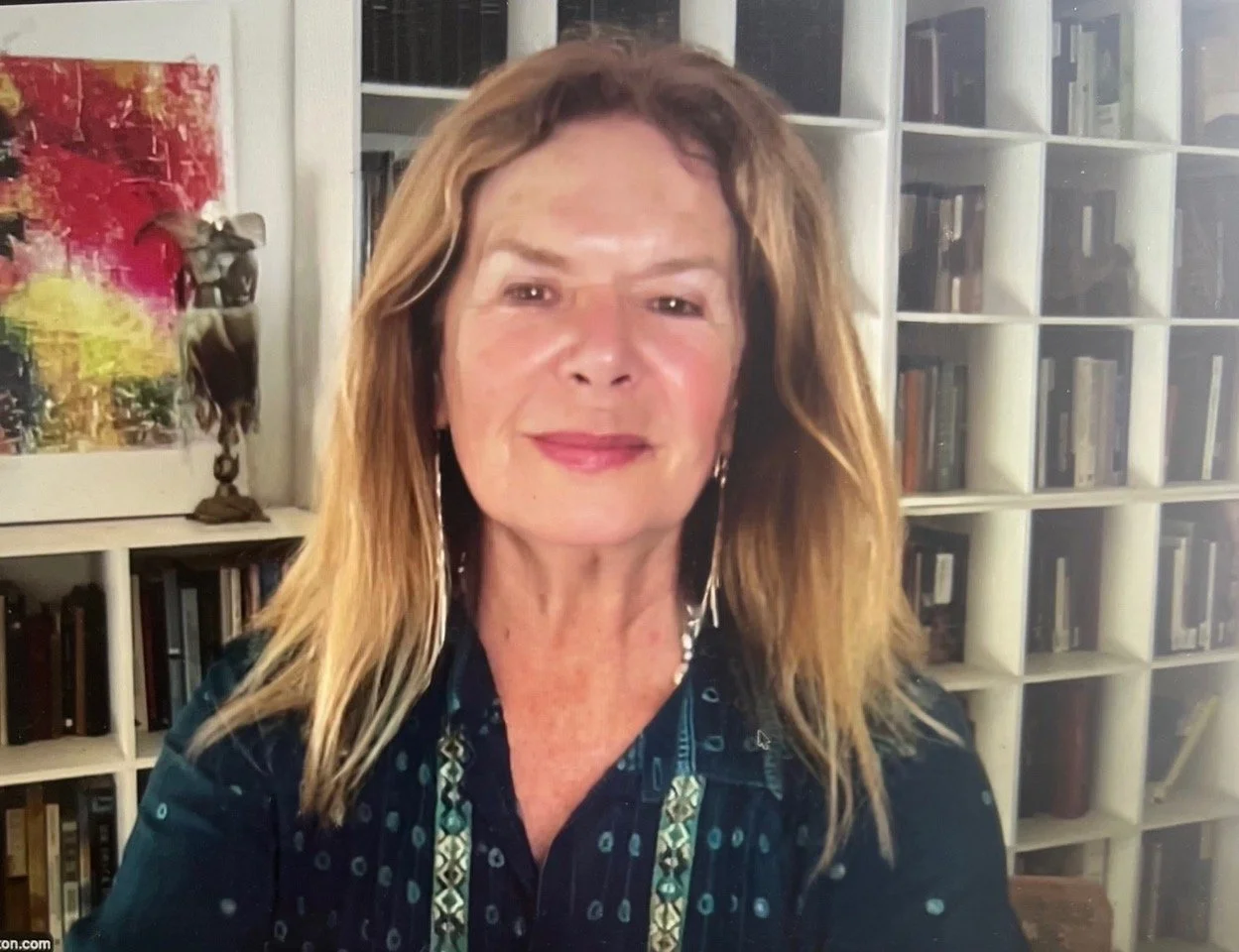
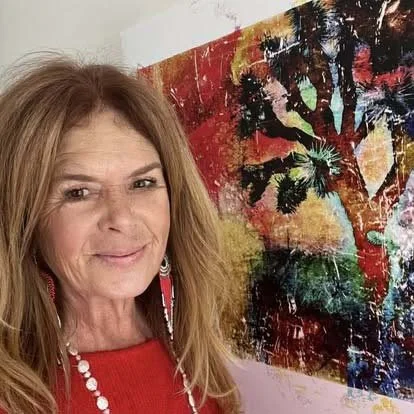
Brenda Littleton is a writer, Jungian coach, educator, and advocate for the role of creativity and imagination in how we come to know ourselves and participate in the world. Drawing from decades across education, mental health, corporate life, and the creative arts, her work brings together depth psychology, writing, somatic Active Imagination, and place-based learning. She works primarily with leaders, creatives, and entrepreneurs, grounded in Jung’s understanding that personal growth involves making conscious what has remained unconscious and that creativity can be one of the ways we do so.
Her term personal literacy describes how we learn to read ourselves, others, culture, and the places in which we live. Influenced by the French concept of terroir, she explores how landscape, relationship, imagination, and story shape who we become and our responsibility for conscious participation in community.
A former university director of graduate writing, Brenda has worked with emerging and professional writers, coached and edited more than thirty authors, taught writing and critical thinking, and written across television, corporate and government communications, poetry, prose, and personal essay. She is currently with Tin Flea Press and co-hosts a podcast, Field Guide to Living Story with Hilary Sloan.
Brenda serves on the boards of What’s Good in the World and the Yucca Valley Center for Spiritual Living. Born on Vancouver Island and raised along the beaches of Los Angeles, she now lives in Joshua Tree, California. For twenty-three years, she shared her life with three Arabian horses who became teachers in healing, writing, art, and matters of the heart, and remain part of how she understands relationship, place, and the many ways we learn to listen.
Please read my Blog for updates on new classes, podcasts, presentations.

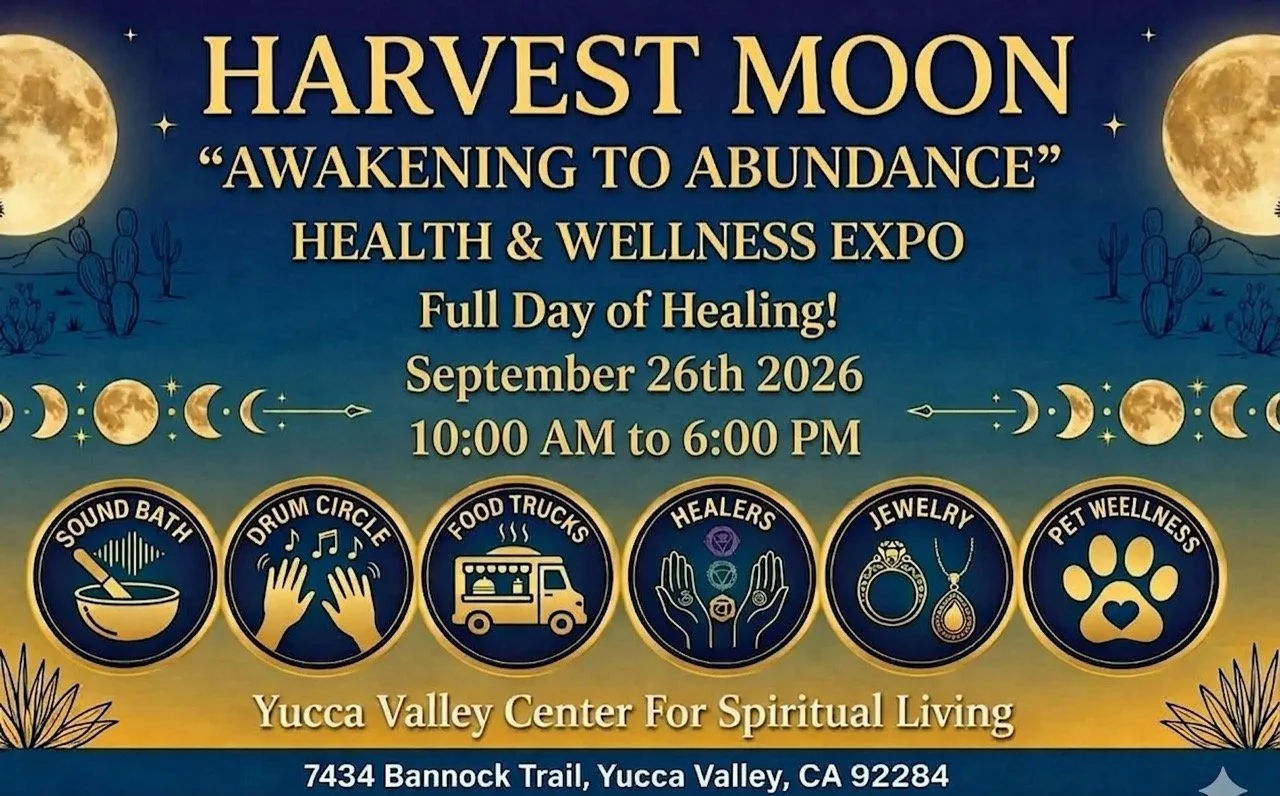
Harvest Moon
“Awakening to Abundance”
Health & Wellness Expo - September 26, 2026
Jungian psychologist Brenda Littleton will speak at 2pm on A New Relationship With Abundance, Exploring Active Imagination, Consciousness and the Wisdom of the Body. Presentation is experiential and provides participants tools to manage their relationship between Fear, Love and Abundance.
Yucca Valley Center for Spiritual Living
Saturday, September 26 • 10 AM - 6 PM
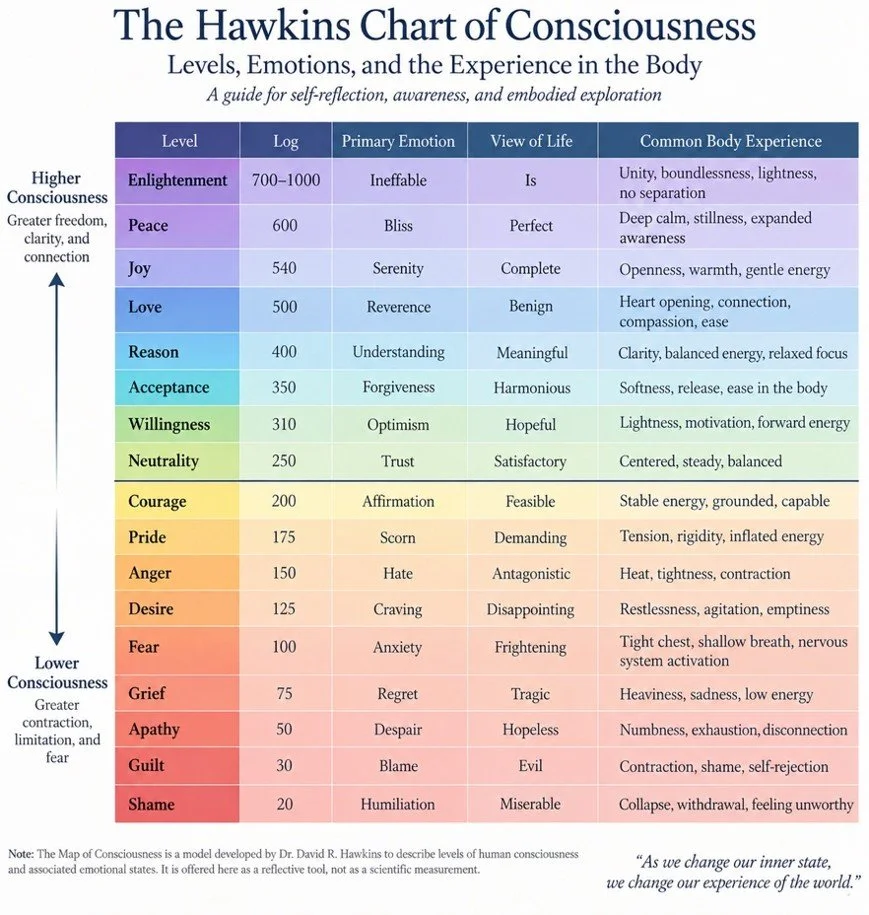
An Introduction to David R. Hawkins’ Map of Consciousness
Exploring the Relationship Between Emotion, Awareness, and the Body
Dr. David R. Hawkins developed the Map of Consciousness in the mid- 1980’s as a framework for understanding how different emotional states influence our perception of ourselves and the world. His model places emotions along a scale, from shame and fear to courage, acceptance, love, peace and how emotions influence our capacity for healing.
Hawkins taught that becoming aware of our emotional states can help us recognize the patterns that shape our choices, relationships, and experience of life. He encouraged people to acknowledge and release difficult emotions rather than suppress them or become identified with them.
How We Can Use It Today: We can use the chart as a guide for self-reflection and embodied awareness. What does fear feel like in the body? Where do we experience contraction, tension, or resistance? What changes when we invite feelings of love, compassion, or acceptance? The chart's numerical levels are part of Hawkins' spiritual model, not scientifically established measurements of emotional frequency. Its value here is as a reflective tool, helping us become curious about our inner experience rather than judging emotions as good or bad.
Our invitation is simple: Become aware of what you feel, listen to what it reveals, and discover what becomes possible when you meet yourself with compassion.
Presented by Brenda Littleton, September 26th, 2026.
Yucca Valley Center for Spiritual Living Health & Wellness Expo. For more information please contact: brenda@brendalittleton.com
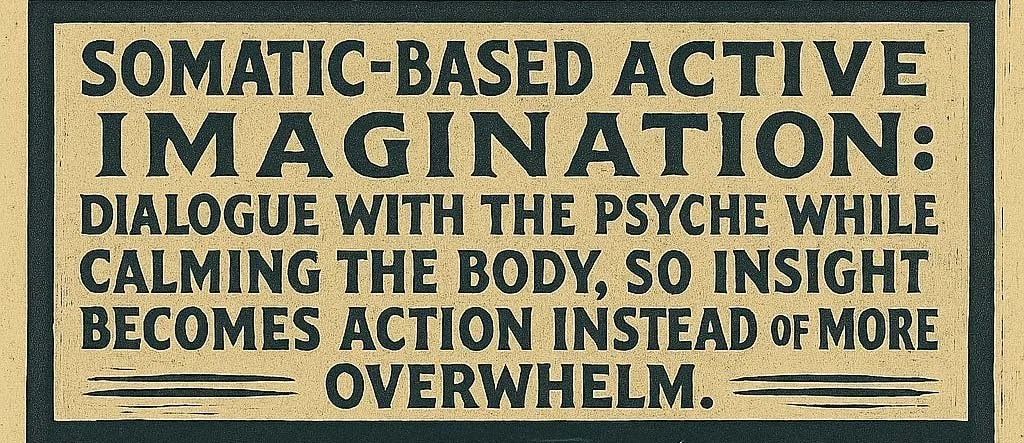
Somatic Jungian Active Imagination: An Invitation to Listen to the Wisdom of the Body
Carl Jung developed Active Imagination as a practice to enter into a conscious relationship with the unconscious. Rather than analyzing our emotions, fears, dreams, or inner conflicts from a distance, we invite them into conversation. In this practice, we allow an image, feeling, memory, or question to emerge and approach it with curiosity rather than judgment. We listen, respond, and discover what this part of ourselves may have to reveal. When we bring Active Imagination into the body, we begin with a simple understanding: The body can offer a doorway into our unconscious experience. Our task is not to force an answer, eliminate an uncomfortable feeling, or immediately solve a problem. It is to establish a relationship with what has been waiting for our attention.
The Practice: Seven Steps
Settle into Your Body: Find a comfortable position. Feel your feet on the ground and allow yourself to arrive in the present moment.
Breathe with Intention: Breathe calmly and naturally. Slowly scan your body from your feet to the crown of your head. Notice where you hold tension and where you experience ease. Relax where you can, and welcome the experience of being with your body.
Invite Your Guest: Bring to mind a feeling, emotion, inner persona, question, or issue you have been curious about. Where does it land in your body? Notice the first sensation, image, or impression that arises. Allow your intuition to lead without immediately asking your rational mind to explain it.
Welcome Your Guest: Gently acknowledge what has appeared. It may arrive as tightness, warmth, an image, a memory, or a feeling. Welcome it without judgment. You do not need to change it or understand it immediately.
Ask Discovery Questions: Begin a gentle conversation.
Who are you? What would you like me to know?
What have you been trying to tell me? What do you need from me?
What might you be protecting? How long have you been with me?
Listen without forcing an answer. Allow the conversation to unfold. Don’t second guess.
Express Gratitude: Thank your guest for appearing and for whatever it has shared. Ask: Would you be willing to continue working with me as I move forward? May I return to listen, receive, and welcome you again?
Return and Integrate: Bring your attention back to your breath, your feet, and the room around you. Take a moment to write or draw what you experienced. Notice what you may wish to carry forward into your daily life.
A Closing Thought: Active Imagination is not about making the unconscious obey the conscious ego. It is about developing a relationship between them.We begin by listening. We continue by welcoming. And through this ongoing relationship, we may bring into awareness what has previously remained unconscious.
The goal is not to conquer the guest, but to discover what becomes possible when we are willing to be in relationship with it.
High-functioning doesn't have to mean high-anxiety.
Less force, more flow and lasting success.
I’m a coach for high-functioning creatives who want to move past anxiety, perfectionism, and self-doubt to succeed with less force and more flow. Drawing on experience in business development, entertainment licensing, graduate teaching, therapy, and Jungian coaching, I help creatives, executives, and outliers achieve lasting results without burnout. Creative success doesn’t come just from pushing harder, but from converting limits into clarity, safety, and insight. When anxiety and procrastination are understood as messages, not enemies, they become fuel for clarity, creativity, and authentic success.
Let’s connect if you’re ready to succeed with less force, more flow, and lasting success.

Life After Fifty: Being Nice Was Never the Assignment
This is for you if you’ve hit a certain age and nothing makes sense the way it used to. Your second marriage looks suspiciously like the one your parents had, and you swore you’d never repeat that story. Your profession feels more like a grind than a gift.
The stress outweighs the return.
A FOUR MONTH PROGRAM:

One client said,
“I grew more in three sessions with you than I did an entire year in traditional therapy.”
If that feels familiar, welcome. You're not too late. You're right on time.
This is your invitation to shed the outdated agreements.
To reclaim your boldness. Your worth. Your weird. Your wisdom.
Because being nice was never the assignment.
Being you was.
Write the Way You Want to Live
This is not a program on how to write. This is an invitation to write the way you want to live: deeply personal, authentic, empowered and free!
Writing rearranges you. It makes things more vivid, more raw, more real.
And that’s exactly the point.
“Tell the truth. Write as if your life depends on it. It does.” -- Natalie Goldberg
This is for those who are ready to find out what their truth is and how to write it.
In the process, you won’t just become a writer, you will write the way you want to live.

If this is you, contact me for more information!
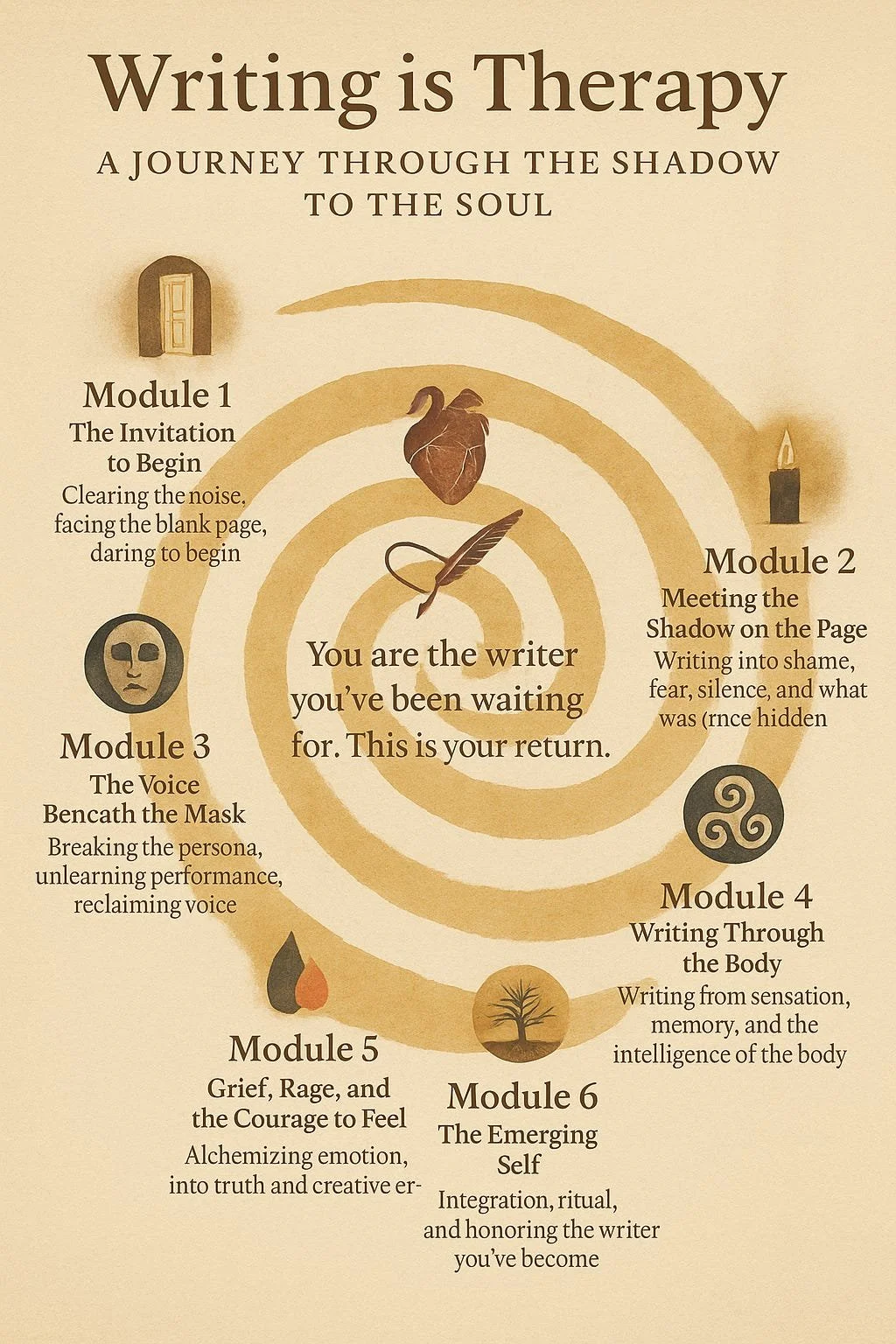
Writing is Therapy: The Ultimate Shadow Work & Transformation
"I can tell how you live your life by how you write."
Before the beauty, there is the mess. Before the clarity, there is the chaos. And before the truth emerges, there is the silence you sit in, waiting, staring, wondering if what lives inside you has any place on the page.
Writing brings all of it to the surface.
The monkey mind. The inner critic. The shame. The belief that everyone else has permission except you. That what you say will never come out right. That the blank page is proof you have nothing worth saying.
And still, you want to write.
You want to slow your thoughts into sentences. You want to stay with a feeling long enough to know what it means. You want to reclaim the parts of yourself that were shamed for speaking out or laughed at for being too much. You want to write through what you’ve spent years avoiding. And you want that writing to mean something — to someone, but mostly to you.
This desire is not a whim. It’s a signal.
It’s the voice of your soul, the same one that has quietly observed your disappointments, your longings, your untold stories, and still believes there is something worth exploring. Worth saying. Worth saving.
As Julia Cameron writes in The Artist’s Way, “Creativity is an act of faith. It assumes that there is a self that wants to be born.” The practice of writing, especially the daily ritual of Morning Pages, becomes a way to meet that self again and again, layer by layer, day by day.
But the first thing you meet on the page is rarely beauty. It’s resistance.
It shows up as procrastination, judgment, comparison. It tells you you’re too late, too unoriginal, too self-indulgent. It sounds like every voice that ever told you to be quiet. Every teacher who corrected your expression instead of celebrating your voice. Every adult who said you were too sensitive, too dramatic, too much.
Writing, real writing, is how we confront all of that.
It’s not an escape from the self. It’s a returning.
As Natalie Goldberg reminds us, “Write what disturbs you, what you fear, what you have not been willing to speak about. Be willing to be split open.” Her approach to writing — raw, intimate, grounded in the body — invites us to stay honest with the discomfort. To use writing as a tool for both revelation and transformation.
Because if you stay with it, if you keep showing up to the page, something starts to shift. Writing worms its way in. It breaks through performance and taps the nerve of something real. A sentence catches you off guard. A memory returns without warning. You tell the truth without planning to. That truth leads to another, and another.
In that unfolding, you begin to recognize something: a voice. Not the voice you were taught to use for approval, but the one that has been buried under years of adaptation, survival, and self-editing. You begin to write like your life depends on it. Because, in many ways, it does.
“The creative process is a process of surrender, not control,” Julia Cameron says. And this surrender is the beginning of shadow work.
Shadow work doesn’t always announce itself as grand catharsis. Often, it slips in as a quiet moment of self-awareness. A sudden sting of memory. A realization that you’ve been living someone else’s expectations. When you write with honesty, not for perfection but for truth, you start to meet these parts of yourself. You begin to remember.
You write to remember what you loved as a child before the world told you it was silly. You write to understand why you stay quiet when you want to scream. You write to explore the grief you’ve carried, the rage you’ve buried, the joy you never allowed yourself to fully feel. And in doing so, you rewrite the story.
Natalie Goldberg’s advice, “Go for the jugular,” is not about drama. It’s about precision. About finding the pulse of what matters and daring to stay there.
Writing is how we metabolize what we haven’t yet been able to say out loud. It is how we integrate the exiled parts of the psyche: the orphaned child, the angry teenager, the grieving adult. We bring them home through the act of telling. Each time we do, the self expands. The shame shrinks. The voice strengthens.
This isn’t about discovering some grand, finished truth. It’s about the ongoing unveiling of what has always been waiting. The writing changes you. And as you change, the writing deepens. You begin to recognize your own voice. You start to trust it. Not because you’ve mastered craft, but because you’ve stopped trying to prove yourself.
A closed loop begins to form. A sacred cycle. Clarity brings more honesty. Honesty brings better writing. Better writing brings you home to yourself.
Stephen King once said, “Writing is not life, but I think that sometimes it can be a way back to life.” For those who have gone numb, who have lost themselves in caregiving, in performance, in obligation, writing can be a lifeline.
It can return you to the center of your own existence.
Not in a narcissistic way, but in a soulful way. You begin to remember that your story matters. That your way of seeing is worth recording. That there is something sacred in the ordinary. You see with new eyes, your own.
As you keep going, you’ll learn how to stay present with discomfort. How to be gentle as you survey new territory. How to sit with incomplete thoughts, fragments of memory, the sting of old criticism, and the slow emergence of something new.
You’ll meet the parts of yourself that were once silenced, shamed, or ignored, and invite them back into the story. You’ll begin to notice where you’ve been performing your life, and where you’re ready to inhabit it with truth.
This can be disorienting.
You may feel the tension of transition. The ache of becoming. But inside that ache, something rare emerges: devotion. Not to writing for recognition, or for output, or for applause, but writing because something in you has finally remembered what it means to be alive.
Henry Miller understood this when he wrote, “The function of the writer is to reveal the truth about the human condition, not to escape it.” Writing does not lift you out of life. It roots you deeper into it. Into the questions. The contradictions. The body. The moment.
And that’s where transformation lives.
Not in clarity alone, but in the willingness to keep returning to the unknown. To say what hasn’t yet been said. To meet yourself in real time, flawed, open, and unfinished.
Over time, you stop writing to be seen and start writing to see.
To see what you think, what you feel, what you need. To see where the past still echoes and where the future wants to unfold. To see the truth of what it means to be you, right now, with everything you carry and everything you hope to become.
You may write through grief. Through longing. Through doubt and rage and joy. And you may find that you are not alone in any of it. That by writing your truth, you’ve tapped into something shared. And that shared recognition, even if it’s only between you and the page, is medicine.
The more you write, the clearer you become. And the clearer you become, the deeper your writing goes. It’s a cycle that changes everything.
And while you may begin this journey to heal, you’ll end up creating something far more lasting: a life anchored in awareness. A practice of radical honesty. A relationship with yourself that no one can take away.
This is not just therapy.
This is art.
This is soul work.
This is how you come home.
Exclusive coaching from a depth psychological perspective.
In these times, we need to return to our core for guidance, solace and clarity, a place where the world can finds its way back to you. As we choose to be conscious of what we want to change in the outer world, we also need to be conscious of what we want to change in our inner self, as well. When we ignore and dismiss a personal dream, a creative desire, a family vision, a community project, a business goal, a spiritual inquiry, an environmental rescue, we choose to silence our soul. We’ve had enough of silenced souls.
"If you listen, you will hear the work calling you; if you act, you will see your soul in action.”
— Brenda Littleton
INTERESTED IN LEARNING MORE ABOUT MY INDIVIDUALIZED AND GROUP WORKSHOPS?

Anxiety?
LEARN THREE TOOLS IN THREE WEEKS
TO FIND GREATER SECURITY & JOY
SOUL OF ANXIETY
Three Live Zoom Lectures:
Plus Course Materials, Workbook
& Private 60 Minute Session
$149

Transformative Education
Online Classes - Workshops, Seminars and Programs - Events

The Harvest Project:
Summer School For The Soul
A highly productive and creative four month from seed-to-harvest, summer school for the soul commitment for creative, personal & social justice endeavors waiting to be launched.

Jungian Coaching
Services I Provide
Current Events.
Consider Attending One Of Our Online Classes, Events, Workshops And More.
"So long as we are not in contact with our own potential, we are vulnerable to being controlled by others.
If we do not know ourselves, we cannot stand to our own truth and are, therefore, in constant danger of invasion by others."
-- Marion Woodman
