
When Doubt Was My Lover
Doubt was elegant in its reasoning and surprisingly persuasive in its caution.
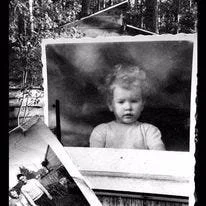
original photo: family photo 1958
For a long time I misunderstood the nature of my relationship with Doubt. I treated it as an occasional visitor, the sort of mild hesitation anyone might feel before choosing a pair of shoes, deciding what to cook for dinner, or wondering whether a concert ticket is worth the price.
That was never the kind of doubt that lived with me.
My Doubt was far more intimate. It did not concern trivial decisions. It appeared at the exact moments when I was closest to becoming fully myself.
It arrived when I stood in front of a room to give a lecture and wondered, quietly but fiercely, Do I know enough to speak with authority?
It arrived when I sat with a depressed client whose eyes were hollow with exhaustion and asked myself, Do I trust my own instincts enough to stay here with them, in the tender, uncertain places?
It arrived precisely when my life asked me for courage.
Which is curious, because courage has never been difficult for me in the obvious places. I have ridden horses that were determined to test gravity. I have steered boats through twenty-foot seas where the horizon rose and fell like a living lung. I have body-surfed in swells that could tumble a person like driftwood.
I have held a father’s hand when his last breath landed in my chest like a quiet bird.
I have stayed on suicide phone calls for ninety minutes, waiting patiently for the tired chemistry of the brain to release enough dopamine so the person on the other end could say, almost with surprise, “I think I’m still here.”
In these moments, life is so large, so undeniable, so loud with importance that doubt has nowhere to hide. The energy of the moment sweeps it aside. There is simply the work of being alive.
But Doubt is cunning. It prefers the smaller rooms.
It arrives when I want something so badly that I cannot tell the difference between dedication and delusion. It sits beside me when I fall in love with an idea that no one else seems interested in receiving. It whispers questions that sound suspiciously like wisdom.
Are you sure?
Maybe this is foolish.
Perhaps you should wait.
Eventually I realized Doubt was not merely visiting. Doubt had moved in.
In fact, Doubt had become my lover.
I excused it. I listened to it. I rearranged my life around it. I fawned over it with elaborate rationalizations. I gaslit myself on its behalf. Doubt was elegant in its reasoning and surprisingly persuasive in its caution.
Like many lovers, it brought gifts. It offered compensations, patterns of dismissal, small addictions to distraction, and a steady retreat into the places that never rejected me: writing, forests, horses, the open sea.
Looking back, I can see that Doubt was an extraordinary companion. It was loyal. It was attentive. It was always ready to appear the moment my life began to open too widely.
What I did not understand for many years was that Doubt had been protecting something much older.
The origin of our relationship goes back to a logging road on Vancouver Island.
I was three years old.
My parents were driving from Port Alberni to Tofino along the rough access road that wound through the mountains before the modern highway existed. In those days it was a narrow logging route. The road was uneven and slick with rain, and the logging trucks had the right of way. When one of those enormous machines appeared around a bend, a small car had to pull off immediately because those trucks carried loads so heavy they could barely slow down.
Driving that road required constant vigilance.
Inside the car, both my parents were smoking. The windows were closed because it was raining. My mother was late in her pregnancy and not feeling well. I had chronic ear, nose, and throat infections from breathing smoke in small spaces, and the pressure in my ears made the long drive unbearable.
I was screaming in the back seat with pain and dizziness and motion sickness.
About two hours into the trip, my mother had reached the end of her patience. She shouted for my father to pull over and get me out of the car.
And so he did.
I was lifted from the back seat and placed on the gravel slope beside the road. Below me was a boggy riverbed scattered with large boulders and cottonwood trees. The river roared through the valley with a wild sound that felt strangely welcoming.
Without hesitation, I ran.
My father was attending to my mother, who finally had relief from the noise of my crying. The landscape was familiar to them. They knew the area well, and perhaps they assumed I would remain nearby.
Instead, I disappeared for two hours.
Down by the river I found a small cove of rocks and shallow pools of water. Moss covered the stones. Branches lay scattered along the banks. I dipped sticks into the water and used them to paint the rocks, watching the dark shapes appear and fade.
I was perfectly content.
When my father eventually found me, I remember feeling excited to show him this small sanctuary that had held me so gently while they enjoyed their quiet.
But relief, fear, and anger are not known for their subtlety.
He scooped me up quickly and returned me to the car. My mother did not look at me. The doors closed. The smoke returned. The road continued.
It took me many years to understand what my three-year-old self absorbed in that moment.
The lesson was simple: You are easier to love when you are quiet.
And so Doubt began its quiet courtship.
As I grew older, the only places I consistently felt risk and excitement were in romantic love. For a week, or sometimes five years, the energy of attraction temporarily silenced Doubt. But whenever confusion entered the relationship, whenever voices were raised or tenderness retreated, Doubt returned immediately to reclaim its position beside me.
It was dependable that way.
For a long time I believed Doubt was simply part of my personality. But life, in its curious generosity, eventually interrupted that belief rather dramatically.
I broke my back and several ribs.
Pain has a way of removing illusions with astonishing efficiency. Lying still for long periods gives a person time to examine their most loyal companions. During those months of recovery I began to see Doubt more clearly. It was not a flaw. It was a protection.
Doubt had spent decades preventing me from reliving the logging road moment of feeling unwanted.
Once I understood that, the spell began to loosen.
These days my life is organized around a different commitment. Instead of proving that I deserve to be here, I practice living in ways that show how deeply I want my own Self.
It is an interesting reversal.
Sometimes, when courage settles quietly into my bones and satisfaction spreads through the ordinary moments of the day, I hear a familiar sound. It is the roar of that river from long ago. The same river that ran beside the little cove of stones where a three-year-old child painted rocks with water and discovered a world that welcomed her without hesitation.
When that memory returns, I sit down beside her.
She climbs easily into my lap, still holding her small stick like a wand, and tells me the secrets she hears from the water, from the trees, from the patient stones. I listen carefully. I hold her the way she should have been held on that rainy logging road.
And I tell her something I did not yet know how to say back then.
I tell her I want her. Always.
When I listen closely, the message that comes back through the sound of the river is no longer the old one.
I do not hear, I don’t want you.
What I hear now is something far wiser.
I don’t want you to doubt.
written by Bren Littleton
original photo: family photo 1958
Tin Flea Press c. 2026