
The Goal Will Show Us What Is in the Way
Time for growth and change? First, question whether you are living from your own center or organizing a life around expectations that define you.
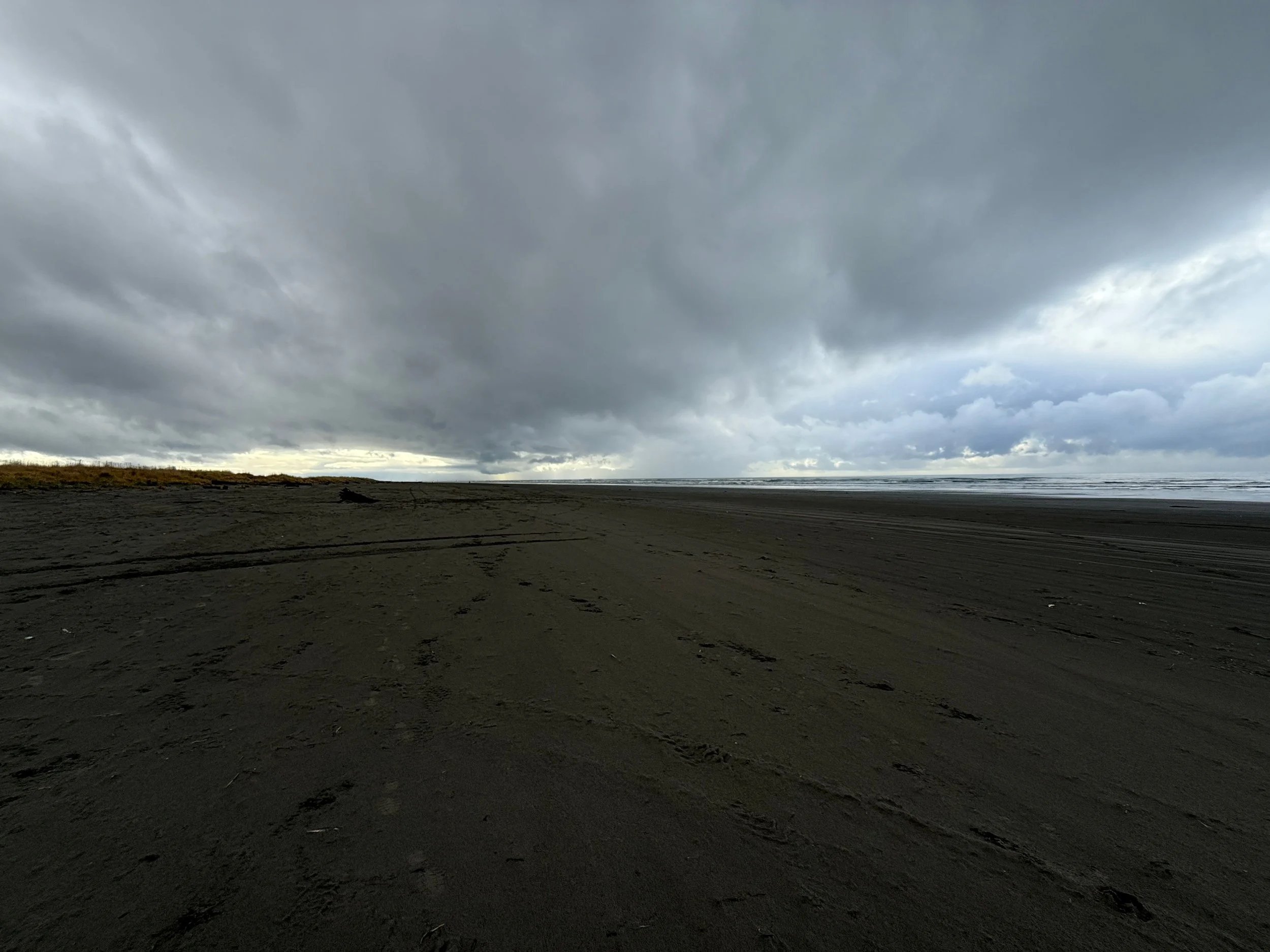
original photograph: B. Littleton
I have come to believe that for every outward goal, there is an attachment to an inward limiting belief; otherwise, we would already have achieved the goal. This is not a reason to distrust the goal or assume that something is wrong with us. It simply means whenever we reach toward a life we have not yet lived, we eventually arrive at the threshold where the person we have been meets the person we are becoming.
When I begin working with someone who wants coaching and mentoring to reach a personal, professional, financial, or creative goal, I do not need to know what the inward limiting belief is. I do not need to go hunting for it, diagnose it, or make uncovering it the first assignment. We begin with the life the person wants to create, and we start moving toward it. The old belief will surface all on its own, usually at precisely the moment when progress begins requiring something genuinely new from us.
This is where the work becomes interesting, because the obstacle often appears disguised as something completely reasonable. We procrastinate. We suddenly question the goal. We become unusually tired, anxious, distracted, irritated, perfectionistic, or convinced that the timing is wrong. We may create unnecessary conflict, return to an old relationship dynamic, become preoccupied with what other people will think, or find a hundred sensible reasons to remain exactly where we are. What looks like resistance is often the old self recognizing that change is no longer theoretical.
Carl Jung repeatedly returned to the question of whether we are living from our own center or organizing our lives around expectations that have been handed to us. This becomes especially important in the second half of life, when many of the structures that once defined us no longer provide enough meaning. We may have become remarkably accomplished at locating approval, meeting expectations, caring for others, being responsible, succeeding professionally, or becoming the person our family and culture could understand. Those adaptations were not necessarily mistakes; many of them helped us belong, survive, achieve, and build a life. The difficulty comes when we continue obeying them long after they have stopped serving the life that now wants to emerge.
That is why an outward goal can become such an extraordinary doorway into inward transformation. You may believe you are trying to write the book, build the business, earn more money, leave the job, create the relationship, establish a boundary, make your art, speak publicly, or finally put your own work into the world. Yet somewhere along the way, the goal asks you to become visible where you once learned to hide, to trust yourself where you once sought permission, to receive where you learned only to give, or to risk disappointing someone whose approval once represented safety.
Now we have arrived at the real threshold.
The tension that appears here is not necessarily evidence that we should turn around. Very often, it is evidence that we have reached the exact place where an old pattern can no longer accompany us into the life we say we want. The body may register this before the conscious mind understands what is happening, which is why fear, anxiety, hesitation, exhaustion, anger, grief, or the sudden urge to retreat can become valuable information. Rather than treating these responses as enemies to overcome, we can become curious about what they are protecting and what they believe will happen if we actually succeed.
This is where Jung’s idea of living from one’s own center becomes deeply practical. The question is no longer simply, What do I want to accomplish? We begin asking what part of me wants this life, what part of me is frightened by it, and whose voice I hear when I imagine crossing the threshold. We begin noticing the difference between an authentic hesitation and an inherited prohibition, between discernment and fear, between the wisdom that says not yet and the old conditioning that has always said you cannot.
The inward and outward work therefore belong together. I am interested in the goal because it gives us somewhere to go, but I am equally interested in what begins to surface as we move toward it. The goal creates motion, motion creates friction, and friction reveals the places where our present life is still attached to an earlier understanding of who we needed to be. We do not have to shame that earlier self or tear our history apart to move forward. We can understand why those patterns developed, honor what they once accomplished, and then decide whether they still deserve authority over the life we are creating now.
Perhaps this is what it means to return to our own center. We are not inventing an entirely new person or erasing everything that came before. We are learning to recognize the quieter voice beneath the accumulated instructions about who we should be, what we should want, how much we should ask for, whom we are allowed to disappoint, and how visible we are permitted to become. Gradually, the outward life begins to come into greater relationship with the inward one, and achievement becomes something more meaningful than reaching another destination. It becomes evidence that we are learning to participate consciously in our own transformation.
If you are standing at one of these thresholds now, you may already recognize it. There is something you want, perhaps something you have wanted for years, and you can feel both the pull toward it and the old resistance rising to meet you. You do not have to know everything that resistance contains before you begin. Start walking toward the goal, and allow the path to show you what is ready to be understood, released, reclaimed, and transformed.
If you are ready to cross into that new territory, I invite you to continue on the path of your own personal story. We can work with the goal in front of you while listening carefully to what emerges along the way, so that you are not simply achieving something new while carrying the same old limitations with you. The deeper work is learning to trust your own center, your own knowing, and the person you are becoming, until the life you are creating begins to feel unmistakably like your own.
“The day came when the risk to remain tight in a bud was more painful than the risk it took to blossom” (attributed to Anaïs Nin).
written: Bren Littleton, August 10, 2026
original photograph: B. Littleton
Tin Flea Press, c. 2026