
Judging Your Self Through the Eyes of "Others."
When authority, safety, and affirmation come primarily from outside, the inner voice grows faint.
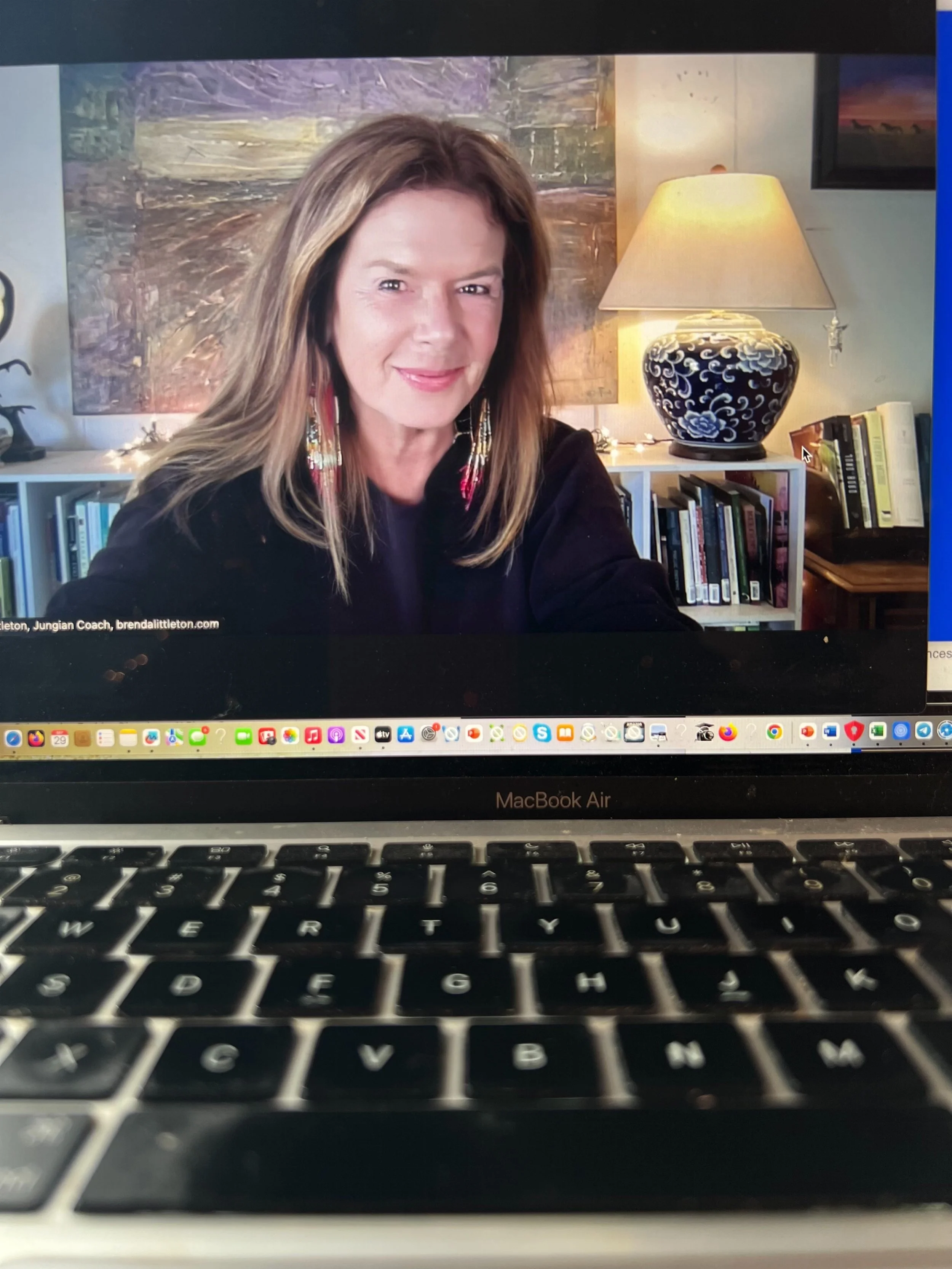
My Winter Program Specials end January 10th.
If you are going to do the work, you might want to enjoy the discount fees.
See details on the Home page of my website:
https://www.brendalittleton.com
Internalized observation is a problem because it leads to a split consciousness, where a person constantly evaluates themselves through the eyes of others.
This can cause self-doubt, anxiety, and a diminished sense of presence, making it difficult to fully inhabit one’s life. It also makes individuals more susceptible to external validation, which can be both powerful and empty.
Ultimately, internalized observation can limit autonomy and freedom, as people struggle to quiet their internal critic and tune into their own instincts. Instead of responding directly to life, energy is spent monitoring, revising, and correcting oneself, often long after the moment has passed.
I was groomed to excel internalized observations in my life: ballet lessons throughout adolescence, parochial school until 8th grade, all the lessons for activities my mother wanted for herself, but instead she insisted I do, even though I had no desire for any of them. Her response, “Just try a few classes . . . then see if you change your mind.”
Over time, I learned that reluctance was something to override, that consent was secondary to compliance, and that perseverance mattered more than pleasure.
Archery, tennis, swimming (I did love), ice skating (cute boys), music, badminton, horse riding (I love horses, not competition), and finally modeling (I made money). Each activity carried its own quiet lesson about performance, evaluation, and being seen. Even enjoyment was conditional. What mattered most was how well I did, how quickly I improved, and whether someone else approved of the effort.
At a young age, I learned to find my self worth from the appraisal of a teacher. Ultimately, I became addicted to school. When the world was crazy, chaotic, loud, I had a legitimate excuse to hide in my room because I was studying, I was doing homework, I was “working” on a project. And, while I experienced continued criticism from not excelling in most of those external classes, I was thriving in my academics.
Academic thriving equated to teacher approval, and often special treatment, which reinforced external validation and my internalized observation, my split consciousness. Approval became predictable. Effort produced recognition. School offered structure, refuge, and a clear set of rules for belonging.
This pattern mirrors what Jung described as an early and overdeveloped persona, a psychic adaptation formed to meet the demands of the external world. When authority, safety, and affirmation come primarily from outside, the inner voice grows faint.
The self becomes skilled at reading expectations, but less skilled at sensing truth. Over time, the persona no longer functions as a flexible interface with the world, but as a governing identity that eclipses instinct and spontaneity.
For girls, this split often deepens through the body. Marion Woodman wrote about how young girls learn to monitor themselves closely, adjusting posture, tone, effort, and emotional expression in order to be acceptable or impressive.
When approval replaces appetite, instinct is slowly overridden. The body becomes something to manage rather than trust. Woodman understood that this kind of self-surveillance creates disconnection, not strength, and that recovery requires a return to embodied knowing, where feelings and desires are experienced as valid sources of information rather than problems to correct.
This internal division is reinforced culturally. Margaret Atwood has written about how girls learn to watch themselves being watched, to live as both subject and object at the same time. A woman becomes the observer of her own behavior, evaluating how she speaks, moves, and reacts, often replaying conversations afterward, judging herself for what she said or failed to say. Jung would recognize this as a misplacement of psychic authority, where reflection turns into self-policing, and consciousness becomes dominated by an internal critic rather than guided by the Self.
It took many disappointments, defeats, losses for me to be complete with both outside validation and internalized observation.
Over time, the rewards diminished. External praise no longer compensated for the internal cost. When other peoples’ ratings of me felt short to the feelings I held for myself, I paused. I thanked this young pattern of survival, recognizing it for what it was, a strategy that once provided safety and structure.
Then I turned toward my own agency. In doing so, all the old ways of attachment fell away. I released myself from what previously held me safe, but what ultimately stunted my growth. What emerged in its place was a quieter authority, one rooted not in being observed, but in being present.
Today, this is the work I do with women in my Jungian practice. Together, we begin to notice the quiet habits of internalized observation that still shape daily life: worrying excessively about upcoming events, replaying conversations long after they end, judging oneself for not responding quickly enough, clearly enough, or kindly enough.
These patterns are not flaws. They are learned strategies, often formed early, designed to maintain safety, attachment, and approval. By bringing them into awareness, we loosen their grip. Women learn to distinguish reflection from self-punishment, discernment from surveillance.
As these internal pressures soften, instinct re-emerges, presence deepens, and authority gradually returns to its rightful place within. What once constrained growth becomes a guide, pointing toward a more personal, embodied, and self-directed way of living.
May you learn to recognize the voice that watches you, thank it for how it once kept you safe, and choose, again and again, to live from the place within that no longer requires permission.
My Winter Program Specials end January 10th.
If you are going to do the work, you might want to enjoy the discount fees.
See details on the Home page of my website: https://www.brendalittleton.com
Written by Bren Littleton
Original photo by B. Littleton