
Identity Collapse
The inner and outer worlds always move together.
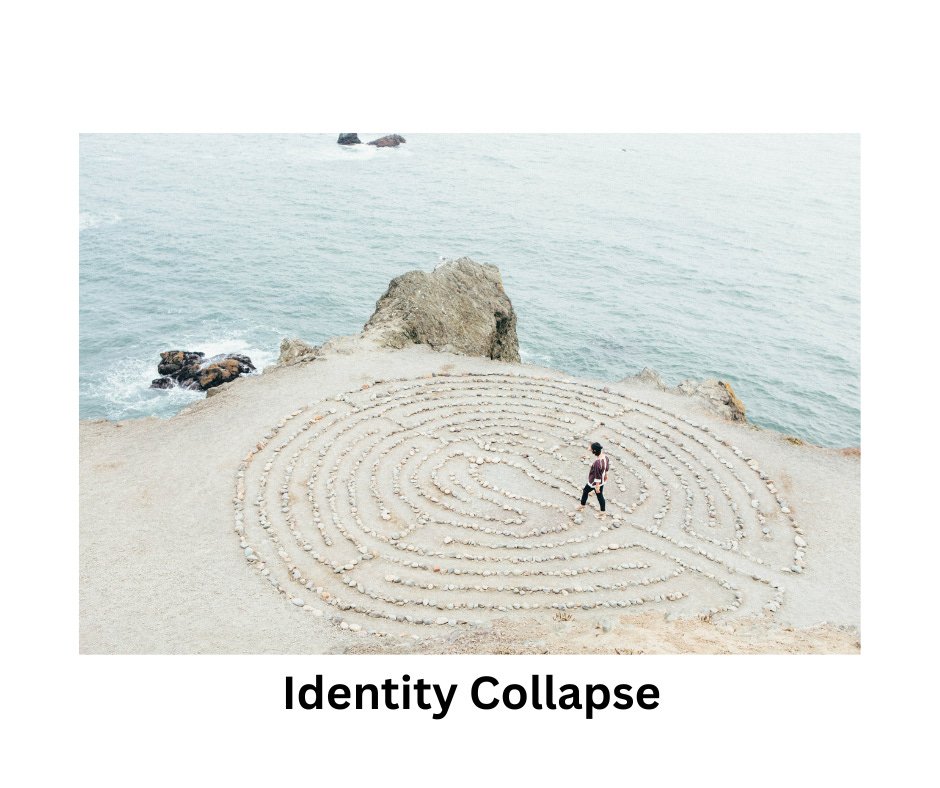
Identity Collapse
There is a moment that comes after the noise stops.
For the professional athlete, it arrives when the body no longer structures the day, when training schedules, seasons, rankings, and collective purpose fall away. What remains is not freedom. It is grief. A stunned, intimate reckoning with absence. The scaffolding that once provided meaning, joy, and self-worth is gone. There is no immediate replacement. Only memory. Only the hollow where a life once fit so perfectly that it felt ordained.
Carl Jung wrote, “What we do not make conscious appears in our lives as fate.” Identity collapse is not pathology. It is a psychological law. When an orientation has completed its work, the psyche withdraws its energy. Desire goes quiet. The future stops calling. The world feels thin, unreal, oddly distant. This is not laziness or depression in its simplest form. It is the soul refusing to counterfeit a next chapter before the truth of the ending has been honored.
I know this territory. I have lived inside the shock of losing a life I loved. A life that felt coherent, blessed, and rightly ordered, a twenty-three year love affair with my horses. I did not want something better. I wanted to understand what had been true. And for a long while, nothing arose to take its place. There was no hunger for reinvention. Only an ache shaped like what once defined me, and a quiet search for how to meet the world without the identity I had relied upon.
Jung understood this descent. He wrote that “there is no coming to consciousness without pain,” and that when an old attitude dies, the psyche must pass through disorientation before a deeper authority can emerge. Meaning cannot be rushed back into existence. It must be re-earned from a more truthful center.
Ancient cultures knew this as well. Many Native American elders speak of times when “the hoop is broken,” when a people lose their way and the world reflects that fracture through chaos, confusion, and grief. Healing, they say, does not begin with strategy, but with remembrance, listening, and humility. The outer disorder mirrors an inner loss of relationship with what once guided life.
Plato warned that societies collapse when they mistake appearances for truth and power for wisdom. Socrates went further, insisting that the unexamined life is not worth living, not as moral scolding, but as psychological necessity. A life, or a culture, that refuses honest self-reflection eventually becomes uninhabitable from the inside.
Even Winston Churchill, speaking from within civilizational crisis, observed that “the price of greatness is responsibility,” and that nations, like individuals, are revealed not in their triumphs but in how they face collapse, loss, and moral reckoning.
We are living inside such a moment now. After prolonged abuse, shock, confusion, and erosion of trust, the stories that once organized our collective identity no longer hold. What we are witnessing is not only political unrest or cultural division. It is identity collapse at the level of a nation. The same symptoms appear: grief, reactivity, nostalgia, numbness, fear, and a desperate longing for certainty where none yet exists.
The inner and outer worlds always move together. Jung reminded us that psyche and society obey the same laws. When a culture can no longer avoid what it has been, it enters the same liminal space as the athlete whose career has ended, the elder whose role has vanished, the individual whose former life is no longer available.
This prelude is not about fixing anything. It is about naming the threshold honestly. Identity collapse is the moment illusion breaks, when old identities can no longer carry the weight of reality. It is the dark clearing before a deeper orientation can be born.
Nothing true is rushed here. Something must be mourned. Something must be remembered. And something older, quieter, and more enduring than identity itself must be allowed to speak.
written by Bren Littleton
January 6th, 2026
Tin Flea Press c. 2026