
Where the Inner Work Meets the World
Reflections on oppression, belonging, and the courage to face what lives within us
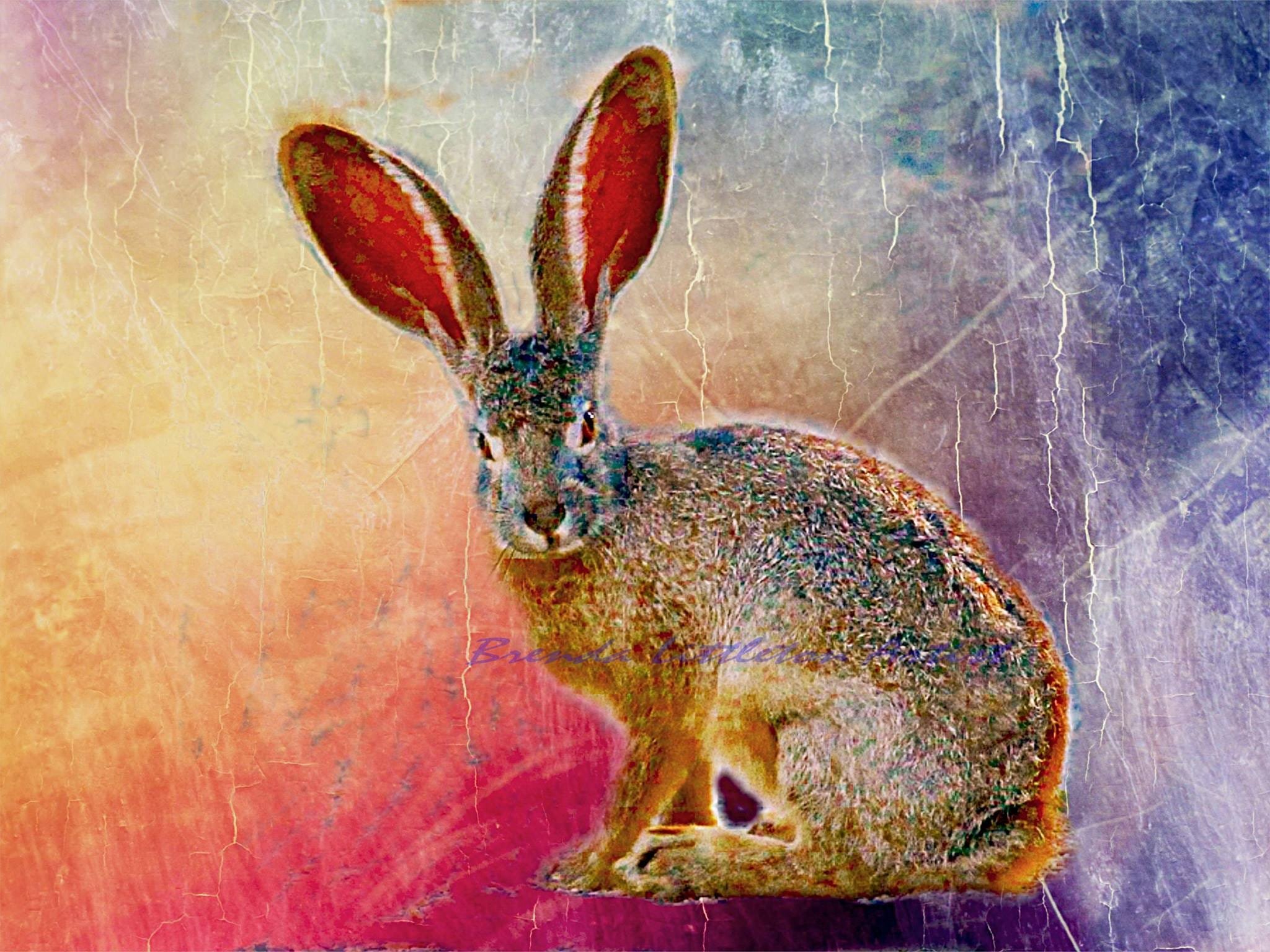
Original hand painted photograph by B. Littleton
After completing a recent essay by Bas Baumann on the necessity of consciously challenging internalized patterns of oppression in order to help create a safer world for women and for those who live outside dominant power (https://www.facebook.com/bas.waijers.9), I found myself reflecting on the many years I have spent sitting with men and women engaged in similar inner work. His writing emphasizes that the “inner oppressor” is not merely a social problem outside us, but a psychological reality formed from cultural conditioning that can predispose a person to overlook, diminish, or unconsciously participate in the marginalization of women and other non-dominant groups. That framing resonates with my experience, yet my own encounter with an inner oppressor has taken a somewhat different shape.
Where his reflection focuses primarily on the part conditioned to oppress outwardly, I have had to reckon with a part that learned to oppress inwardly first, to diminish my own voice, needs, and sense of belonging, and only later to recognize how such self-oppression can be projected onto the wider world. In my case, the inner oppressor initially functioned as a survival strategy shaped by early experiences that suggested I was not wanted or did not belong. Over time I came to see that when self-oppression remains unexamined, it quietly influences how one perceives others and navigates power, safety, and legitimacy.
For many years I attempted to find safety by aligning myself with certain privileges, including economic and white privilege, hoping they might buffer me from misogyny or exclusion, yet no strategy truly allows us to bypass patriarchy because we live inside it whether we consent to it or not. External alignment does not dissolve internalized structures, and the psyche continues to carry what culture has inscribed upon it. Recognizing this has required an ongoing honesty about how systems of power live not only outside us but within our expectations, fears, and strategies for survival.
The conversation itself is both simple and complex. After seventy years of living, I have come to see that life is a container that holds conflict and connection at the same time. Our early families, our search for purpose, our education, professions, partnerships, and friendships all unfold within cultural conditions and historical moments we did not choose, yet which nonetheless shape our expectations and identities. Alongside these visible influences are quieter conflicts that live beneath language, rooting themselves in the psyche and the body, anchoring us in patterns we struggle to name.
And still, every conflict in my life has also been met by connection. Healing rarely arrived through isolation; it arrived through relationship with other humans, with animals, and with the living world itself. Horses, dogs, cats, the land, and the sea have each steadied me when human systems felt rigid or unkind. Nature, more than any doctrine, has been an honest mirror and a refuge, reminding me that belonging is not granted by culture alone but by participation in life.
Reading Baumann’s reflection stirred these recognitions. His description of meeting the inner oppressor is familiar, because that presence is not an external villain we can simply reject; it is a shadow formed from culture, conditioning, and inherited beliefs, living quietly in our assumptions about gender, safety, power, and worth. To encounter it requires humility, because many of us absorbed ideas about femininity and masculinity long before we had the capacity to question them. We learned roles before we learned reflection, and most of us complied and resisted in unequal measure.
There is also a cost to overcorrection. In attempting not to cause harm, some people shrink their own vitality, feel shame about their sexuality, or become hypervigilant about how they are perceived. Suppression, however well intended, does not create healing, because whatever is forced underground does not disappear; it waits and re-emerges in disguised form. Real change asks for something more honest: a willingness to meet these parts within ourselves, to admit their presence, and to choose differently with awareness.
The patterns we inherited are not abstract ideas but lived realities that appear in who is interrupted, who is believed, who is safe, who is paid, and who is erased. Injustices are not distant; they are woven into daily interactions, and they continually ask for our attention. Each moment presents a choice about whether the inner oppressor will merely replay the past or be interrupted and redirected. Awareness, in this sense, is not passive but disciplined, because it requires noticing what moves through us and refusing to let yesterday’s conditioning author today’s behavior.
From a Jungian perspective, the task is not to exile this inner oppressor but to reassign it. The parts shaped by fear, silence, or compliance are often psychic orphans that once protected us. When they are listened to, given language, and placed within a wider field of consciousness, they can become allies in discernment rather than agents of harm. Rehoming these rejected parts, allowing them to be seen, heard, and welcomed, does not excuse their impact but transforms their role, so that they alert us when we drift into numbness and call us back to conscience.
What we are witnessing in the United States at this moment can be understood not only as the strain or dissolving of civic systems but also as a mirror of inner systems many individuals feel loosening within themselves. Institutions erode when their underlying structures are neglected or denied, and the psyche follows similar laws. A culture, like a person, cannot outrun its shadow indefinitely, because what is disowned eventually appears in consequence.
My counseling and coaching practice has long rested on the recognition that every outward goal is tied to an inward limitation. As a person moves toward a meaningful aim, an inner barrier almost inevitably arises, often in ordinary moments, in the body’s stress responses, or in the quiet hours before sleep. This is not sabotage but revelation, because the limitation signals where integration is required if the goal is to be sustained by a fuller self.
When this inner work is avoided, the outward process becomes strained, not because the goal is misguided but because the psyche is asking to be included. Societies demonstrate parallel dynamics when they resist self-examination, since unaddressed fear and denial tend to harden into control and mistrust, eventually weakening the systems meant to provide stability.
Conflict, therefore, is not the enemy of growth but one of its engines when it is met in relationship. Human beings are not built to metabolize large tensions alone, and when conflict exceeds solitary capacity, connection becomes necessary. Without connection, the work is abandoned, and what is abandoned returns later in more rigid forms. Democracies face a similar danger when citizens withdraw from the labor of participation and repair.
The deeper invitation of this moment may be to strengthen both inner and outer containers so they can hold truth, disagreement, and repair without collapse. A democracy, like a psyche, remains viable through self-examination, shadow acknowledgment, and the willingness to repair in relationship. Change within the individual is inseparable from change within society because the two are in constant dialogue, each shaping the other.
Seen in this light, meeting the inner oppressor, rehoming disowned parts, and recognizing inward limitations are not merely personal tasks but contributions to the ethical maturation of the culture. We do not heal the world by ourselves, yet we also do not heal apart from it, because every increment of consciousness subtly alters the field in which we live together.
written by Bren Littleton
Tin Flea Press
Original hand painted photograph by B. Littleton